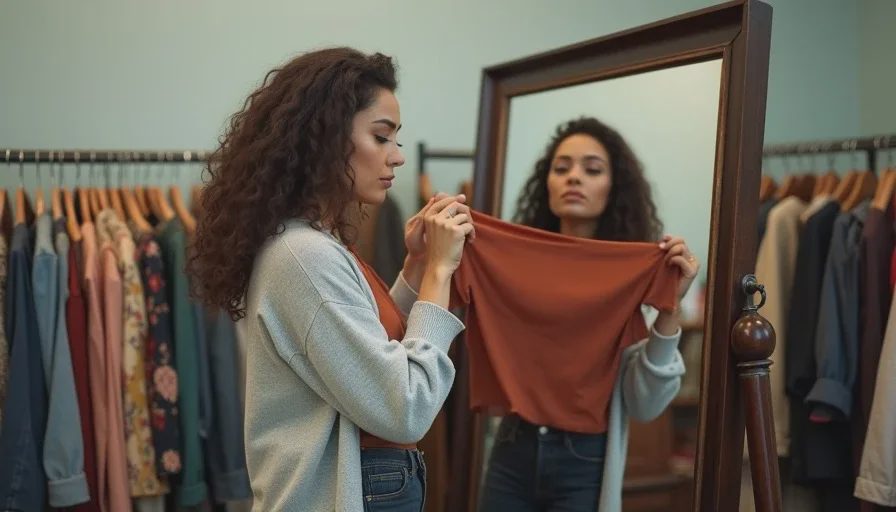
I used to buy vintage clothes the way some people buy souvenirs: with my eyes, not my instincts. A color would catch me from across the store, and I'd buy it without holding it up to my face. Then I'd get home, put it on, and wonder why I looked tired or washed out. The problem wasn't the piece. It was that the piece had nothing to do with my face.
Over years of thrifting, I've learned that thrifted clothes that don't clash with your face aren't a matter of luck. They're a matter of paying attention before you buy. The mirror in the dressing room is your best tool, but only if you know what to look for. Here are my rules.
Why the Face Matters More Than the Rack
A piece of clothing can look gorgeous on a hanger and completely wrong on your body. But the part that matters most is the part closest to the collar: your face. Your skin tone, your hair color, your eye color, and even the makeup you usually wear all affect whether a color or pattern will lift you up or drag you down.
Vintage stores are full of beautiful pieces in every color imaginable. Some of those colors will make your skin look alive. Others will make you look like you haven't slept in a week. The trick is learning to tell the difference before you pay.
The Hanger Lie
A bright mustard sweater can glow on a wooden hanger and then turn your face sallow the moment you put it on. That's the hanger lie. Colors change depending on what they're next to. The only way to know if a color works is to put it near your face — not just against your wrist, not just in your hands. Right up under your chin.
Rule 1: Know Your Undertone Before You Shop
I've written about undertone before, and it applies just as much to clothes as it does to foundation. Your undertone is the color underneath your skin: warm, cool, neutral, or olive. It doesn't change with a tan. It's the same in January and July.
Warm Undertone
If your skin leans warm — if gold jewelry lights you up and your veins look greenish — you'll often look best in warm colors: brick, rust, mustard, cream, olive, coral, and warm browns. These colors echo the warmth in your skin instead of fighting it.
Cool Undertone
If your skin leans cool — if silver jewelry is your friend and your veins look blue or purple — you'll usually shine in cool colors: navy, charcoal, berry, true red, lavender, and cool greens. These tones bring out the clarity in your skin.
Neutral Undertone
If you can't tell, or if both gold and silver work, you're probably neutral. That means you can wear a wider range, but you may still notice that certain shades drain you. Pay attention to what you're wearing on the days you get compliments — that's your clue.
The Test I Use in a Thrift Store
Stand in front of the mirror and hold the piece directly under your chin. Look at your eyes first, then your skin. If your eyes look brighter and your skin looks fresher, it's a yes. If you notice shadows under your eyes that weren't there before, or your skin looks gray or yellow, put it back. Your face is telling you something. Listen to it.
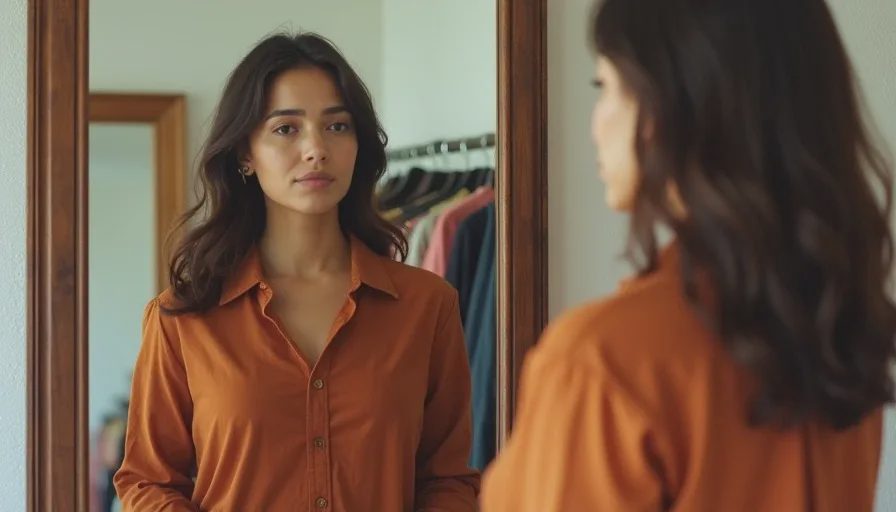
Rule 2: The Pattern Shouldn't Be Louder Than You
Vintage patterns are part of the appeal. But a big, busy pattern can overwhelm your face and make you disappear. The rule I use is simple: the pattern should frame you, not shout over you.
Pattern Scale and Your Features
If you have delicate features — small eyes, fine brows, a narrower face — a large, bold pattern can feel like it's wearing you. Smaller, more spaced-out prints usually balance better. If you have stronger features — a wider face, fuller lips, a stronger jaw — you can carry a bolder pattern more easily.
The Distance Test
In the store, hold the piece at arm's length and look at it from a few feet away. If the pattern blurs into a single color or loses its shape, it's probably going to read as noise from a distance. If you can still see the individual shapes and they feel balanced, it'll likely work in real life.
Keep the Face Area Simple
The most important part of a patterned top is the part near your face. If the pattern is dense and chaotic right up under your chin, it draws attention away from your features. I look for pieces where the pattern softens near the neckline, or I balance a busy pattern with a simple neckline — a crew neck or a deep V that gives the face a clear frame.
Rule 3: The Neckline Is a Frame, Not an Afterthought
A neckline does more than show off your collarbone. It's a frame for your face. The shape and height of the neckline change how your face looks — and whether the piece works with your hair and makeup.
High Necklines
A high crew neck or a turtleneck closes the frame and brings all the attention to your face. If you have a strong jaw and you want to emphasize it, a high neck works well. If you have a shorter neck or a softer jawline, a high neck can feel suffocating and make your face look rounder.
V-Necks and Open Collars
A V-neck or an open collar creates a vertical line that lengthens the neck and opens the face. This is the most universally flattering neckline for a reason. It gives your face room to breathe and works well with both statement makeup and bare skin.
The Hair Test
When I find a piece I love, I also think about how I usually wear my hair. A high neckline with hair down can feel heavy. The same high neckline with hair pulled back can feel sleek. I try to picture the whole look — hair, makeup, neckline — before I buy.
Rule 4: The Texture Should Match Your Makeup Mood
This is a rule I came to later in my thrifting life. The texture of a fabric affects how your makeup sits with the whole look. A shiny satin blouse calls for a different face than a nubby wool sweater.
Shiny and Silky Fabrics
Silk, satin, and other shiny fabrics have their own light. If your makeup is also high-shine — glowy base, glossy lips — the two can compete. I usually pair shiny fabrics with a soft matte base and a satin lip, so the clothes get the light and the face stays calm.
Knits and Wools
Textured fabrics like wool, boucle, and chunky knits absorb light. They can handle a little more glow in the makeup — a dewy cheek, a highlight on the brow bone. The texture grounds the shine, and the whole thing feels balanced.
Lace and Sheer Details
Lace is busy and delicate. It asks for minimal makeup — clean skin, defined brows, a simple lip. Too much eye makeup with a lace collar can feel costumey. Let the lace do the talking.
How I Build a Thrift Look From the Face Down
When I go thrifting now, I go in with my face in mind. I know my undertone. I know my go-to makeup moods. I know which necklines work with my hair. And I use the mirror as my editing tool.
The process goes like this: I spot a piece I like. I hold it under my chin. I check my eyes. I check my skin. I look at the pattern. I look at the neckline. I think about how I'd do my makeup and hair with it. If I can see the whole look, I buy it. If I can't, I put it back and thank it for the lesson.
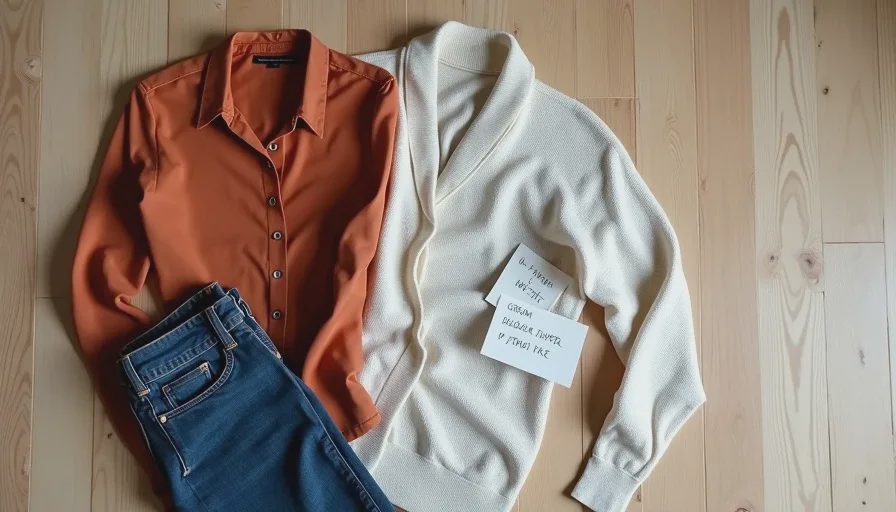
The Real Rule
The best thrifted clothes are the ones that make you look like yourself — not like a costume, not like a trend, not like someone else's photo. That means the color works with your skin, the pattern works with your features, and the neckline works with your hair and makeup. The rack is full of beautiful things. But the only ones that matter are the ones that light you up.
So next time you're standing in a vintage store, don't ask "Is this cute?" Ask "Does this work with my face?" Your mirror already knows the answer. You just have to look.
No notes yet — write the first one.