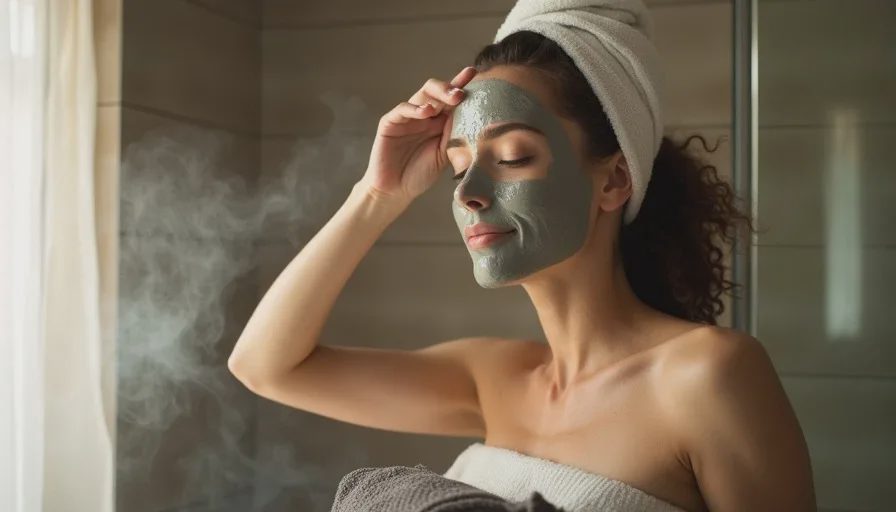
The first time I stepped into a hammam in Marrakech, I thought I was just going to take a bath. I came out two hours later with skin so soft I kept touching my own arm, a head full of steam, and a new understanding of what "reset" actually means. The Moroccan hammam ritual isn't about getting clean. It's about slowing down long enough to shed whatever the week left on you — literally and not.
Since coming home to Seattle, I've adapted what I learned into a Sunday evening reset. It's not a hammam, and I won't pretend it is. But the rhythm is the same: heat, steam, exfoliation, rest, and moisture. It's the one hour of my week where I don't do anything but take care of my skin. Here's how I do it.
What the Hammam Taught Me About Reset
In the hammam, no one rushes. The room is warm and full of steam. There's water everywhere. Women sit on the stone floor or on low stools, moving slowly through the same steps their mothers and grandmothers moved through. The first thing I noticed was the pace. Nothing was quick. Nothing was efficient. It was the opposite of my usual Sunday.
The Rhythm Comes First
The ritual matters as much as the products. You don't scrub your skin in a hammam the way you scrub a pan. You soften first, then you exfoliate gently, then you let your skin breathe before you feed it. The order is everything. Skip the softening and the scrub hurts. Skip the rest and the moisture doesn't sink in. I try to keep that rhythm at home, even though I'm in my own bathroom and not a warm stone room.
It's Not About Fixing Your Skin
This is the part that stuck with me. The women in the hammam weren't trying to fix anything. They weren't treating acne or chasing a glow. They were maintaining skin that was already healthy, and they were taking time to do it. That mindset changed how I think about my own routine. My Sunday reset isn't a correction. It's a continuation. My skin is already good. This just helps it stay that way.
The Sunday Reset, Step by Step
Here's my at-home version. It takes about an hour, sometimes a little more if I'm not in a hurry. I use products I can find in Seattle, and I've adjusted the steps for skin that's used to a cold, damp climate instead of a dry, hot one.
Step 1: Steam and Soften
I start with a warm shower. Not hot — hot water strips the skin. Just warm enough to open things up. I let the water run over my shoulders and face for a few minutes, breathing in the steam. This is the part where I slow down.
While my skin is still damp, I apply a thin layer of Moroccan black soap, or a gentle creamy cleanser if I'm out of it. The real stuff smells like olive and eucalyptus and has a gel-like texture. I massage it into my skin with my hands, then rinse it off with warm water. This softens the top layer of dead skin and preps it for exfoliation.
Step 2: Exfoliate With Intention
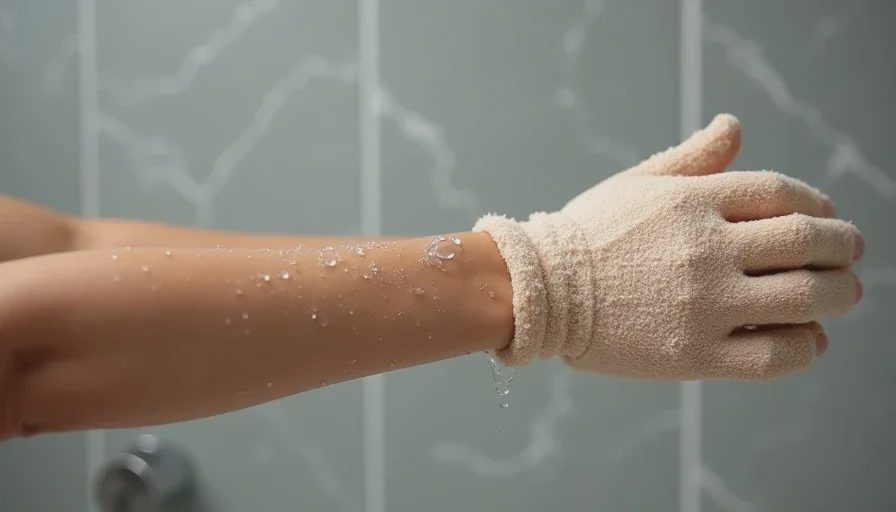
In the hammam, this step uses a kessa glove — a rough-textured mitt that sloughs off softened dead skin. At home, I use the same glove, but I'm much gentler than I was the first time. That first time, I scrubbed hard because I thought that was the point. I came out pink and stinging, and my skin was sensitive for days. Now I know better.
I use long, even strokes, always moving toward the heart. I start at my feet and work up, then my arms and chest. I don't go over the same area more than twice. The goal isn't to remove visible skin. It's to smooth the surface, not sand it. If your skin turns red, stop. That's your sign.
Step 3: Mask and Rest
After exfoliating, I rinse everything off and pat my skin dry — not rub. Then I apply a simple clay mask. In Morocco, rhassoul clay is traditional. It's mineral-rich and draws out impurities without stripping. I mix a small amount with water or rose water until it's a spreadable paste, then apply a thin layer to my face and neck.
I leave it on while I sit on the edge of the tub or wrap myself in a towel and sit on the bathroom floor. This is the resting part. I don't scroll my phone. I don't plan the week. I just sit. Three to five minutes is enough — I'm not trying to turn myself into pottery. Then I rinse with lukewarm water and press my skin dry.
Step 4: Seal With Moisture
The last step is the one I used to rush, and it's the one that matters most. After all that steam and exfoliation, your skin is ready to drink. I apply a layer of pure argan oil — the same thing the women in Marrakech pressed into their skin after the hammam. It's rich but absorbs quickly. On my face, I use two or three drops. On my body, a little more. Then a light moisturizer over the top to lock it in.
The result is skin that feels calm and soft, not tight or shiny. I sleep well on Sunday nights, and I wake up with a face that looks like it actually rested.
The Mistakes I Made at First
I made several mistakes when I first tried to recreate this at home. Here are the ones I see most often when people try it.
Scrubbing Too Hard
I already mentioned this, but it's worth repeating. The kessa glove feels rough, so it's tempting to press. Don't. The softening step is what does the heavy lifting. If you've softened properly, you barely need to scrub. If your skin burns when you moisturize afterward, you've gone too far.
Skipping the Rest Step
The first few times, I rushed through the mask because I was bored or cold. But the rest step is where your skin calms down after the exfoliation. It's not optional. Even three minutes of sitting still makes a difference.
Doing It Too Often
I tried doing this every day in the beginning. My skin became dry and irritated, and I couldn't figure out why. Now I do the full ritual once a week, on Sundays. If my skin feels congested midweek, I do a shorter version — steam and moisturize, no scrub. But the full reset is a weekly thing, not a daily one.
What I Keep in My Sunday Kit
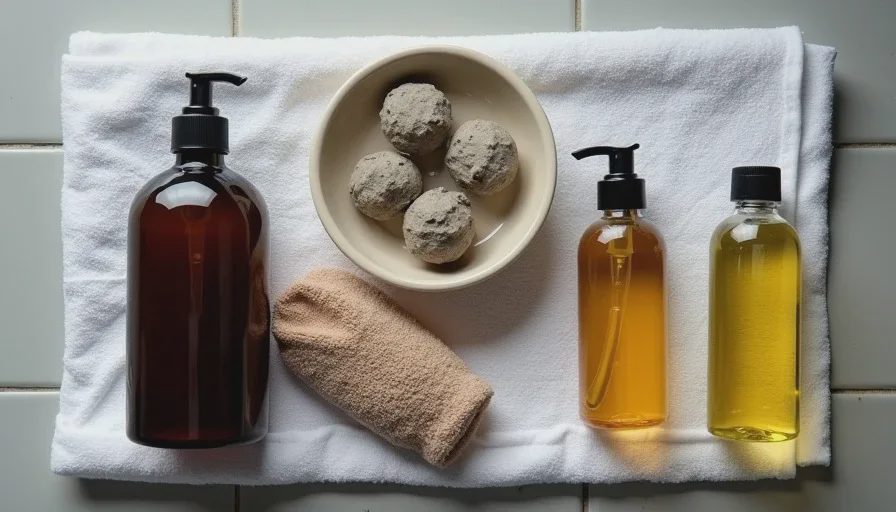
You don't need a suitcase full of products. Here's my minimal kit:
A bottle of black soap or a gentle creamy cleanser
A kessa glove
A small bag of rhassoul clay or any gentle clay mask
A bottle of pure argan oil
A clean, soft towel
That's it. I've had the same kessa glove for over a year, and the argan oil lasts months. This is not an expensive ritual. It's a slow one.
The Real Point of a Reset
The Moroccan hammam taught me something I didn't expect. The ritual wasn't about looking different afterward. It was about feeling present in my own skin during it. The steam, the slow strokes, the resting — it all added up to an hour of attention I normally don't give myself.
That's what a Sunday reset is. It's not another chore. It's a pause. You're already beautiful. The ritual just helps you remember it. And in a week full of things that pull you out of your body, an hour of coming back to it is not a luxury. It's a necessity.
So if you try this, don't rush it. Don't scrub hard. Don't scroll. Just steam, soften, rest, and seal. Your skin already knows what to do. You're just giving it the time to do it.

No notes yet — write the first one.