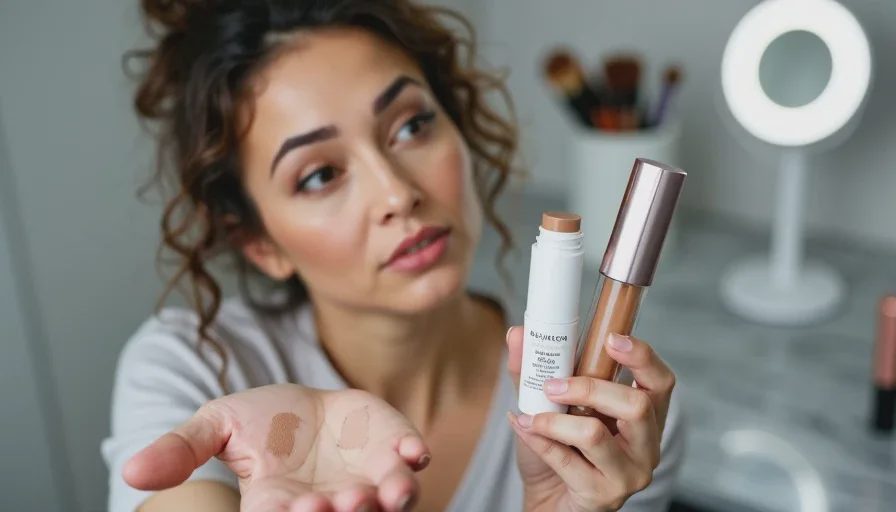
I get this question more than almost any other: “Is an expensive concealer worth it?” So I decided to run a real $12 vs. $48 concealer test. I bought both with my own money, wore them on my own face for three weeks, and used them on clients with dry, oily, and combination skin. Here’s what I found.
The truth is, price tells you very little about performance. A $48 concealer can crease under dry eyes, and a $12 one can last through a full workday. But there are differences — in texture, finish, shade range, and how the product behaves over time. I’m not going to tell you which one to buy. I’m going to tell you what each one does, so you can decide.
How I Tested Both Concealers
I kept the variables as controlled as possible. Same prep, same setting method, same lighting for photos. I wore the $12 concealer on one eye and the $48 on the other for two full weeks, swapping sides every few days to be fair. Then I used both on five clients with different skin types and let them give me feedback after a full day.
Both concealers claim medium-to-full coverage with a natural finish. Both come in a doe-foot applicator. Both have a shade range wide enough to match most people, though the luxury one has more undertone options. So the real differences had to show up in wear.
Coverage: Both Cover, but Differently
The drugstore concealer had thicker coverage straight from the wand. It covered dark circles and redness quickly, but it also looked more like makeup if I applied too much. I learned to use a tiny dot and tap it out.
The luxury concealer was thinner and more fluid. It built coverage in layers, which took longer but gave a more skin-like finish. For deep dark circles, I needed two layers of the luxury one, while one layer of the drugstore version was enough.
So on coverage alone, the $12 concealer won for speed and hiding power. But coverage isn’t everything.
Wear Time: The Real Difference Showed Up
This is where things got interesting. On my own combination skin, the $12 concealer wore well for about six hours before it started to fade around my nose and settle into the fine lines under my eyes. By hour eight, I could see it breaking down slightly.
The $48 concealer held up longer. It faded more evenly and creased less under the eyes. On my dry-skinned clients, the luxury version stayed smooth for most of the day. But on my oily-skinned clients, the drugstore version actually held better in the T-zone — the thicker texture resisted breaking up in oil.
So if you have dry under-eyes, the luxury formula may be worth it for the wear. If you’re oily, the cheaper one might surprise you.
Creasing: The Under-Eye Test That Matters
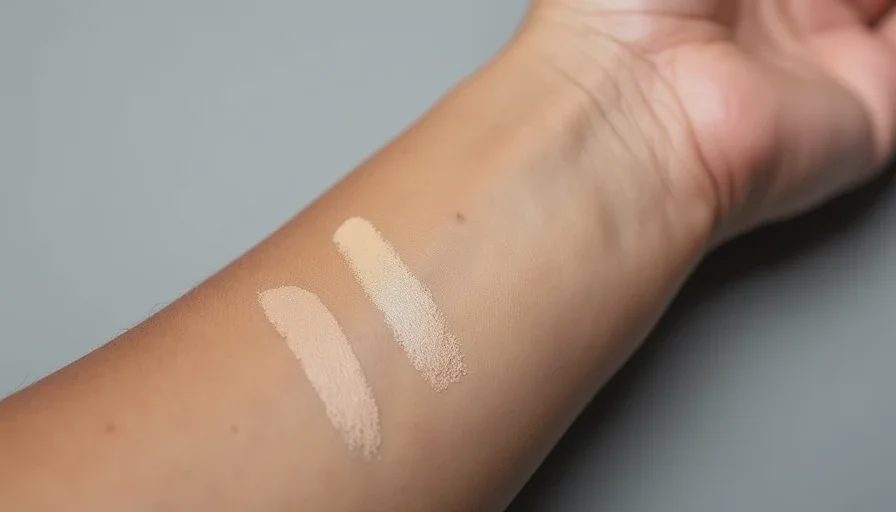
Creasing is the reason most people switch concealers. I applied both concealers to bare under-eyes and checked them after four hours, then eight.
The $12 concealer creased faster on my dry clients. It gathered in fine lines unless I set it lightly with powder. But here’s the thing: I set it with powder, and the creasing stopped. The fix was one extra step.
The $48 concealer creased less on its own, but it still creased on me by the end of the day. No concealer is crease-proof, no matter what the box says. The difference was how easy it was to press back into place. The luxury formula melted back into the skin with a finger tap. The drugstore one needed a little more work.
Oxidation: The Silent Turn
Both concealers oxidized slightly after dry-down. The drugstore shade turned about half a shade darker and a touch more orange. The luxury one shifted less and stayed truer to the initial color.
This matters if you’re already between shades. I had to go one shade lighter in the drugstore version to end up at the right color. If you order online and can’t test, that’s a real risk.
Price Tier Realities
The $12 concealer gives you strong coverage and solid wear for the money, especially if you set it and don’t mind a slightly thicker texture. The $48 concealer gives you a more elegant formula, longer even wear on dry skin, better shade nuance, and less oxidation.
Neither one is a scam. Neither one is a miracle. The price difference buys refinement, not magic.
What I’d Tell My Best Friend
If my best friend asked me which one to buy, I’d ask about her skin and her patience level.
If she has oily skin, wants fast coverage, and doesn’t mind setting with powder, I’d tell her to save the money and get the $12 one. It does the job.
If she has dry under-eyes, wants a more natural finish, and is willing to spend a little more, I’d tell her the $48 one is worth trying, but only if she can test the shade first.
And if she’s somewhere in between? I’d tell her the truth: the $12 concealer with a tiny bit of extra effort looks about 90 percent as good as the $48 one on most days. The last 10 percent is real, but whether it’s worth $36 is a personal call.
The Honest Bottom Line
A concealer’s job is to make you look less tired, not to fix your face. You don’t need the most expensive one to look like yourself. You need the one that works with your skin, your budget, and the amount of time you’re willing to spend tapping it in.
I still keep both in my kit. The drugstore one for oily days and quick jobs. The luxury one for dry under-eyes and photo work. Both have earned their place, and neither one is sitting in a drawer unused.
That’s the best kind of test result: when both products are good enough to keep, and the only real question is what you value more.


No notes yet — write the first one.