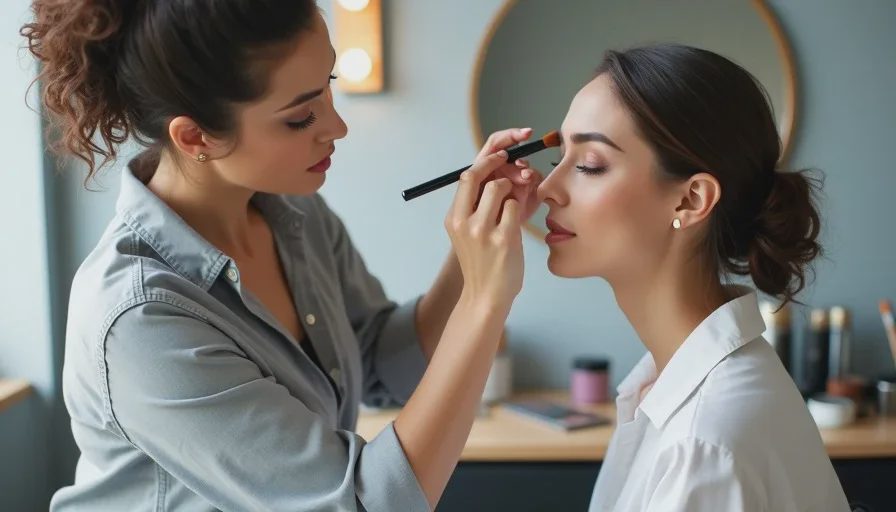
I used to think “hooded” and “deep-set” were two ways of describing the same thing. They both involve the area above the eye, right? Wrong. The first time I used the same eyeshadow map on a client with hooded eyes and then on a client with deep-set eyes, the results were completely different. One looked soft and lifted. The other looked heavy and tired. Same palette, same brushes, same me — different anatomy.
Hooded eyes and deep-set eyes are not the same shape, and they need different maps. If you've been following a tutorial and wondering why it doesn't look right on you, it might be because you're using the wrong map for your eye. Here's how to tell them apart and how to adjust your technique for each one.
What Hooded Eyes Actually Are
Hooded eyes have a fold of skin that covers some or all of the mobile eyelid when the eye is open. You can have a visible crease when the eye is closed, but when you open your eye, the skin above the crease drapes down and hides the lid. This is common with aging, but it's also a natural shape that many people have from childhood.
The main challenge with hooded eyes is that anything you put on the mobile lid disappears when the eye opens. If you apply a beautiful shimmer on the lid and then open your eye, it's gone. That's why standard tutorials that tell you to put a light color all over the lid and a dark color in the crease often fail on hooded eyes — the dark crease color sits right where the skin folds, and the light lid color vanishes.
What Deep-Set Eyes Actually Are
Deep-set eyes sit deeper in the skull, under a more prominent brow bone. The eye itself looks set back, and the brow bone casts a natural shadow over the lid. The crease is usually visible when the eye is open, but the area under the brow bone can look darker or more recessed.
The challenge with deep-set eyes is the opposite of hooded eyes: you have too much natural depth, and if you add more dark shadow in the crease, the eye can look sunken or heavy. Deep-set eyes also often have a lot of visible lid space, so eyeshadow placement needs to brighten and bring the eye forward, not push it back.
How to Tell Which One You Have
Look straight into a mirror with your eyes open. If the skin above your crease touches your lash line or covers most of your mobile lid, you likely have hooded eyes. If your crease is visible but your eye appears set back under a prominent brow bone, you likely have deep-set eyes. Some people have a combination of both, but for most, one feature dominates.
The Pencil Test
Take a pencil or a makeup brush and hold it horizontally against your brow bone, just under the eyebrow. If your eye sits behind the pencil line when you look straight ahead, you have deep-set eyes. If the pencil sits on the skin above your eye without much depth behind it, you're more likely hooded. It's not a scientific test, but it helps you see the relationship between your brow bone and your eyeball.
The Same Palette, Two Different Maps
Let's say I have a basic neutral palette: a light matte cream, a mid-tone warm brown, a deeper brown, and a soft shimmer. Here's how I'd place each shade differently for hooded versus deep-set eyes.
Map for Hooded Eyes
For hooded eyes, I move the crease color higher, above the natural fold, so it's visible when the eye is open. I apply the mid-tone brown in a soft windshield-wiper motion just above the hood, blending upward toward the brow bone. Then I use the deeper brown on the outer corner, but I keep it low and slightly winged out, not dragged into the fold.
The lid itself gets the light matte cream, but I don't rely on it to show when the eye is open. Instead, I place the soft shimmer just at the inner corner and on the very center of the mobile lid, right above the lash line, where it catches light even when the eye is open. Eyeliner stays thin — a thick line will eat the visible lid and make the eye look smaller.
Map for Deep-Set Eyes
For deep-set eyes, I avoid putting dark shadow in the crease. The natural shadow is already there. Instead, I apply the light matte cream all over the lid and up onto the brow bone to bring light forward. The mid-tone brown goes on the outer corner, but I blend it softly and stop before it reaches the deepest part of the crease.
The deeper brown is optional, and if I use it, I keep it only at the very outer lash line as a liner. The soft shimmer goes on the center of the lid to catch light and bring the eye forward. Eyeliner can be slightly thicker on deep-set eyes because there's usually more visible lid space to hold it.
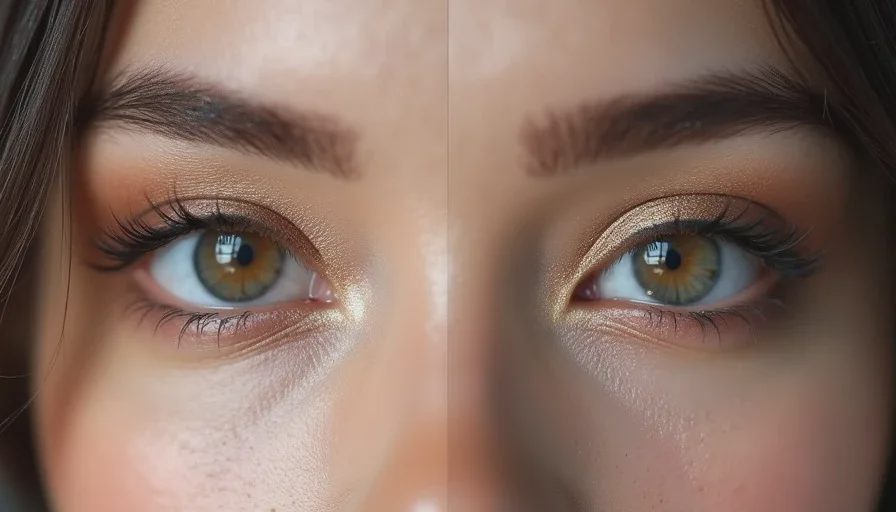
The Mistakes I See Most
I've made these mistakes myself, and I see them repeated all the time.
For Hooded Eyes: Dark Crease, No Lift
If you put a dark crease color directly in the fold of a hooded eye, it disappears when you open your eye and can make the eye look heavy. The fix is to move the crease color up, above the fold, and keep the fold area clean with a light matte shade.
For Deep-Set Eyes: Too Much Depth
If you pack a dark shade into the crease of a deep-set eye, you're adding shadow to a place that already has natural depth. The eye can look sunken and tired. The fix is to keep the crease light and use definition only at the outer corner and lash line.
For Both: Skipping the Under-Eye
The lower lash line is an underused tool. For hooded eyes, a soft smudge of the mid-tone brown on the outer lower lash line balances the higher crease placement and opens the eye. For deep-set eyes, a light shimmer on the inner lower lash line brings light into the shadowed area. This small step can change the whole look.
What I Told My Clients
I once had a client with hooded eyes who told me she'd given up on eyeshadow because it always disappeared or looked muddy. I showed her the higher crease placement and the inner-corner shimmer. She literally leaned into the mirror and said, “That's where it's supposed to go?” She'd been following a deep-set map for years.
Another client with deep-set eyes came in asking for a smoky eye. She thought she couldn't wear dark shadow. I showed her how to keep the dark color on the outer corner and lash line while brightening the lid, and she walked out with a smoky eye that didn't make her look tired. It wasn't about avoiding dark colors. It was about knowing where to put them.
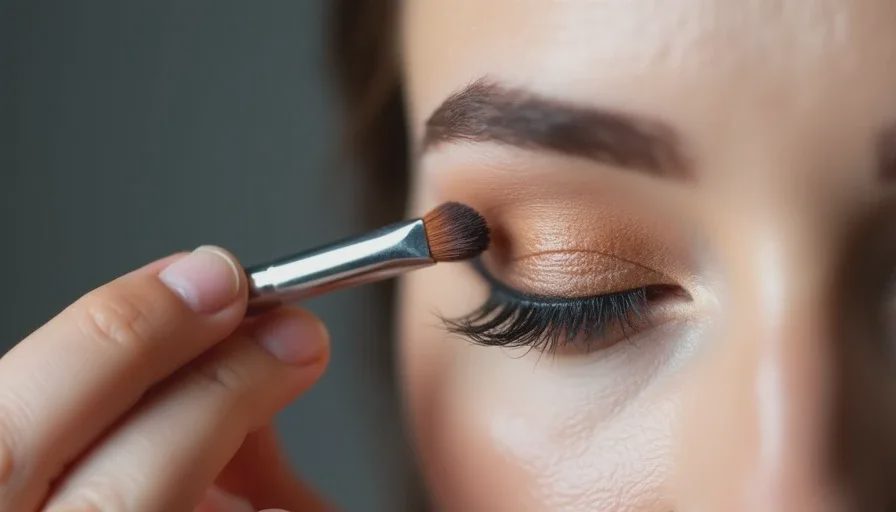
The Real Lesson
Your eye shape is not a problem to solve. It's a map to learn. Hooded eyes and deep-set eyes both have their own beauty, and once you know which one you have, the same palette can do completely different things. The goal is to work with the natural structure of your face, not against it.
So the next time you open your eyeshadow palette, take a second to look at your eyes first. The map is already there. You just have to read it.
No notes yet — write the first one.