
People ask me all the time how I choose which products to review. The short answer is: I don't choose. The products choose themselves. If I can't test it the right way, I don't write about it. If I can't be honest about it, I don't write about it. If I wouldn't tell my best friend the truth about it, I don't write about it. That's the whole system behind how I decide what deserves a real review — and it's why you'll never see a bought post on this site.
The beauty industry is built on reviews that are actually ads. I've been on the receiving end of those pitches. Brand sends product, brand pays for post, post says something nice, everyone moves on. I'm not interested. I didn't become a makeup artist to sell you something you don't need. I became one to show you what you already have. So the review process has to match that belief.
My One Rule: I Don't Get Paid to Like Anything
This is the foundation. I don't take money from brands for reviews. Not for a positive review, not for a "neutral" mention, not for a link in a roundup. If I review something, it's because I bought it myself or because I tested it on enough real faces that I feel confident telling you about it.
What "No Bought Posts" Actually Means
A bought post isn't always obvious. Sometimes it's a flat fee for a "review" that's actually a promotion. Sometimes it's a commission on sales. Sometimes it's just a free product with the expectation of coverage. I don't do any of it.
If a brand sends me something unsolicited, I don't review it. If I'm curious about a product, I buy it. If it's too expensive for me to buy without knowing if it's worth it, I skip it or wait until I can try it in person. That's the trade-off. It means I review fewer products than many bloggers, but the ones I do review have been through a process I can stand behind.
The Test That Makes a Review Real
A real review isn't a first impression. It's a relationship with the product over time. Here's what that looks like for me.
Weeks, Not Swipes
I don't write a review after one application. Most products behave beautifully for the first hour. The question is what they do after eight hours, after a week, after being in a hot car or a dry plane cabin. I wear every product for at least three weeks before I write a single word.
That timeline matters because skin changes. A moisturizer that feels rich on day one might clog pores by day ten. A foundation that looks perfect in week one might start separating by week three. You can't see that from a counter swatch, and you can't see it from a one-day test.
Multiple Faces, Multiple Climates
My own face is only one face. So when I can, I test on clients with different skin types. Oily, dry, combination, sensitive. Young skin, mature skin, skin with texture, skin with redness. If a product only works on one type, I say so. If it works across the board, I say that too.
I also test in different conditions. Seattle's damp winter is a different testing ground than a dry hotel room in Marrakech. If a product survives both, it's earned a real recommendation.

The Oxidation and Wear Check
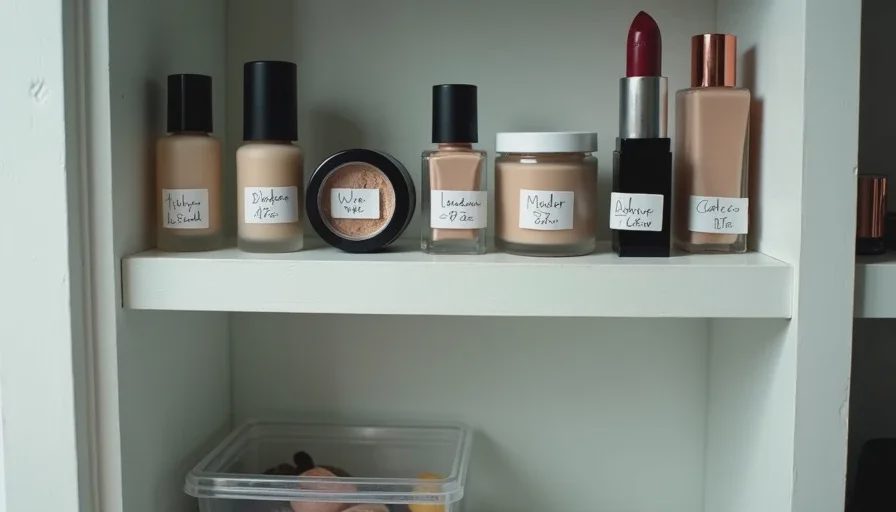
For base products, I photograph them in daylight at the start and end of the day. I check for oxidation — does the shade change after drying? I check for wear — does it fade evenly or break apart? I press blotting paper to the T-zone to see how much oil comes through. I look at how it sits in the fine lines around my eyes after a full day.
These details never make it into a quick review. But they're the difference between a product that's worth your money and one that's just good in the store.
What Makes Me Say No
Most products never make it to a review. Here's why.
Products That Fail Early
If a product stings, breaks me out, or looks bad by hour four, it's out. I don't need three weeks to know. I finish testing it only if the problem might be caused by something else — like a bad primer combination or an unusual skin day. But if it fails consistently, I move on and don't write about it. My reviews are for products worth your time, not a list of everything I hated.
Products I Can't Afford to Replace
If a product is expensive and I can't afford to keep using it after my first tube runs out, I say so. That's not a reason to skip reviewing it — it's actually useful information. But I won't pretend I have long-term experience with something I used twice and then had to stop buying. Honesty includes admitting what I don't know.
How I Choose What to Review
I don't review everything that launches. The beauty industry launches something new every day. Most of it isn't worth your attention. Here's how I filter.
Reader Questions Come First
Many of my reviews start with a question from a reader. Someone asks about drugstore foundation for oily skin. Someone asks if an expensive concealer is actually better. Someone asks what to pack in a travel makeup bag. Those questions guide me more than any press release.
My Own Kit, My Own Money
If I'm going to put something in my professional kit, I need to know it backwards. Those are the products I review most often. Because if I'm going to use it on a client's face, I need to trust it the way I trust my own hand. That trust comes from the testing process.
Why This Blog Will Never Run a Bought Post
I want to be clear about this, because it's the reason Suitcase Vanity exists in the first place.
Trust Is the Whole Product
You can't buy trust. You can only earn it, one honest post at a time. If I accept money for a review, I stop being a makeup artist and start being a salesperson. I'm not interested in that trade. My readers are smarter than that, and so am I.
I Have Another Job
This is the practical part. I make my living as a makeup artist — real clients, real faces, real weddings. That income means I don't need this blog to make money. It means I can afford to buy the products I test. It means I can say no to a brand and still pay my rent. That freedom is rare, and I don't take it for granted. But it's also why this blog can be what it is.
The Bottom Line
You don't need more products. You need fewer, better ones — chosen for you by someone who isn't trying to sell them. That's what I want The Honest Vanity to be.
So when I review something, know this: I paid for it, I wore it, I tested it on real faces, and I'm telling you the truth. If I wouldn't tell my best friend to buy it, I won't tell you to. And if I ever change that rule, I'll tell you that too.
That's the whole system. It's not complicated. It's just honest.


No notes yet — write the first one.